Autobots Roll Out!
Reflections on a decade of enabling AI
Kim Gastinger
12/26/20257 min read
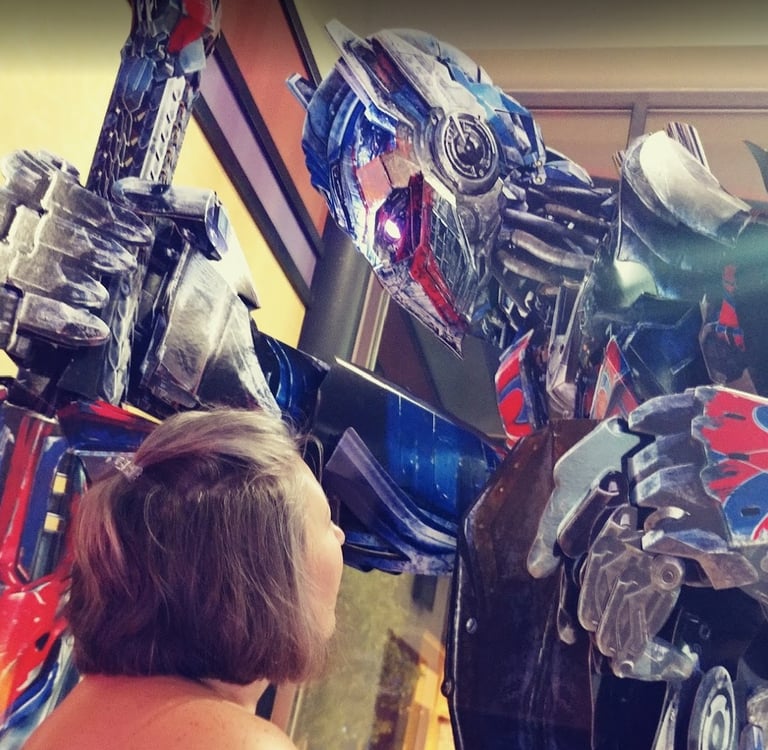
As a GenX kid growing up in the 1980’s, my childhood experience mirrors a collective described by many others of my generation. We love pop culture, toys, games & music. The highlight of my week was waking up to Saturday morning cartoons where I would sit on the floor with a bowl of cereal watching favorite animated characters on my parent’s large console television. I became a fan of the popular cartoons at the time, religiously watching “Gem”, “Masters of the Universe”, “GI Joe” (a real American He-Ro) & “Transformers”.
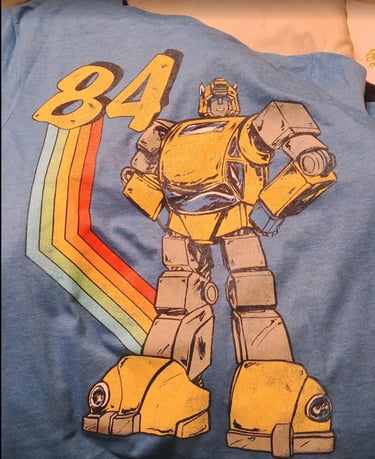
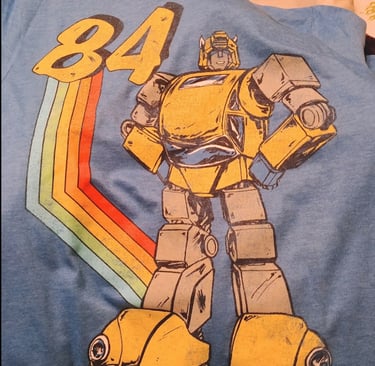





I lived amongst a village with a neighborhood packed full of children. My younger sister, Lori, is three years younger than me. She had a handful of neighborhood friends who played with Cabbage Patch & Strawberry Shortcake dolls. But unlike my sister, I was the only girl in my age group, so I played with MatchBox cars, Atari video games, & action figures.
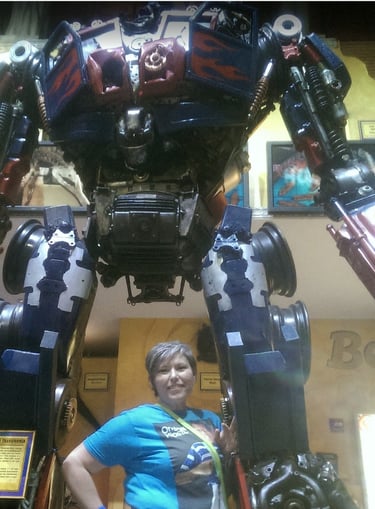
“Transformers” was my favorite cartoon because I love the humanity personified by various robots, especially Optimus Prime. It was fascinating for me to think about the concept of a machine transforming & blending in with humans. The personalities of the aliens matched the “brand” for popular vehicles of the time with a futuristic artificial intelligence unique only to Autobots & Decepticons. This admiration for Optimus Prime did not wane as I grew into adulthood.
In 2016, I made one of best decisions for my career when I chose to leave Humana after being directly recruited by a newly acquired credentialing company. It was a difficult decision to leave because my career was “on the rise” in an emerging space within clinical market operations. Healthcare interoperability was on the horizon. Much like our analog cellphones from the 1990s, medical devices ten years ago were hardware investments requiring modern upgrades to efficiently source & share medical data. I loved my team & the work, but I felt professionally limited since I was positioned within “IT”.
After venture investors acquired Aperture from United’s Optum, the management team was focused on accelerating business agility necessary to diversify their product offerings. I was attracted to an opportunity when directly recruited to work in a much smaller organization where I was not “pigeon-holed” to operate within only one functional role. I craved an environment to individually grow. It was a win/win for both the company & me since I have a diversified skillset accompanied by credentialing, training & experience in project management, process improvement & agile.
A few months after I joined, we spent almost a month collectively documenting standard operations, practices, roles & responsibilities for both business & technical roles. As a process-oriented person who is visual, I volunteered to assist with documenting & mapping flows for understanding current state business operations, regulatory constraints, the market & our tech stack.
When I joined the organization, there was a 3rd party professional service vendor working on implementing new MVP technology building a system to manage workflow for operations. After I stepped in to the role of project manager, we delivered a new capability enabling work queue management that helped bring visibility into the manual processes being performed by front-line individual contributors.
Putting on my ScrumMaster “hat”, I facilitated our first big room planning in 2017 using Kanban with sticky notes on the walls of a conference room to “brain dump” big ideas & discuss organizational priorities. There were no immediate plans to increase operational head count, so we had to improve throughput & figure out how operations could process more provider credentialing applications with the existing staff. The solution was simple…automation. The robots were coming!!!
The investment of taking the time to “Gemba walk” by observing front line associates & documenting their current state standard processes, operating procedures, system functionality, workflow & enabling technology paid high dividends. As a team, we could easily identify “low hanging fruit” opportunities while also getting real-time feedback from our internal customers.
Our first problem that we tackled was to fix a simple but manually intensive & time-consuming death index validation task required of all types of provider applications. Social Security Administration was the source of truth. Regulation mandated our company prove provider was not reported as deceased by Social Security. This was a foundational step to mitigate risk of fraud or issuing credentialing. From an operational perspective, there is an opportunity cost since applications for deceased require no further processing. At that time, the majority of the verifications were performed manually, so a staff member had to navigate to a public website to paste information from the application to confirm the provider did not appear on the death index records.
We had a couple of options on how to automate the Social Security Death Index verification step in the near term: 1) Import data from a source file on the website; or 2) use robotic process automation (RPA) to automate the same manual steps performed by a human. Social Security was in the process of modernizing with APIs, so we elected to use RPA as an MVP to meet near term needs.
I stepped into the role of ScrumMaster by helping the team establish agile operations with two testers, two developers, & a trainer. As a team we aligned on two-week sprints & used TFS for our backlog. Our new ops workflow management system integrated with our robot, which was programmed to automatically perform a series of standard steps. I campaigned hard to name our robot “Prime” under the guise of this being our “first” robot but secretly it was a homage to one of my favorite cartoon characters from my childhood.
We spent about a week in pre-planning using sprint zero as a hardening timebox to establish our delivery strategy, formalize our team way of working & create a defined backlog & acceptance criteria required to bring Prime to life. A key aspect of our work was not just the tech dev but incorporating operational readiness tasks required to effectively introduce end users so they understood how Prime would be changing their way of working.
The objective was fairly simple & enabled by our new workflow processes & technology. When a new application hit the intake queue, then Prime would execute on a defined series of verification steps by interacting directly with the public website. We also designed an exception queue that was managed by a human because any “hits” required a manual review to confirm Prime’s accuracy. Since a match meant that the applicant was deceased, it was a quality step to have a person confirm the match. This was a significant time savings since the number of applications matched to a deceased person’s data was very small & an infrequent scenario.
Prime came to life in less than six weeks, birthed from the collective effort of six people & shaving minutes off application processing time helping to exponentially increase throughput which translated to revenue because clients paid by the application.
Our entire IT department had less than two handfuls of people with most of our dedicated resources supporting tech ops & support desk. Prime’s agile team was small & cross-functional out of necessity. We “borrowed” someone from training, so that she could develop training content as we built Prime. She also represented the end users by helping us test to ensure that Prime was working as designed. This was also an accelerator of agility because she was able to give immediate feedback on process impacts & potential test scenarios (today we call this Test-Driven Development). By working in parallel on operational readiness, the team was able to accelerate onboarding of end users for using the new death index process once Prime was launched live in production.
Only in my rearview can I appreciate the organic beginnings of my career as a business agility & transformation coach. I naturally like to solve problems but was very naïve because I had never been exposed to strategically managed transformation. At Humana, we were in very restrictive silos where “thinking outside of the box” was openly discouraged because working differently meant challenging the status quo. This pressure to “stay in my lane” was a contributing factor for leaving.
After a couple of years, I returned to Humana with an opportunity to manage the implementation of machine learning in Enterprise Data & Analytics. The organization was embarking on extensive modernization & enough time had passed so leaders could appreciate my unconventional way of working to deliver projects, programs & products.
I had no idea there were frameworks with actual dedicated roles for this type of work. It would be a few years after I helped launch Prime when I earned my SPC from Scaled Agile that I would understand the significance of my contribution in helping launch & lead a new way of working with no silos.
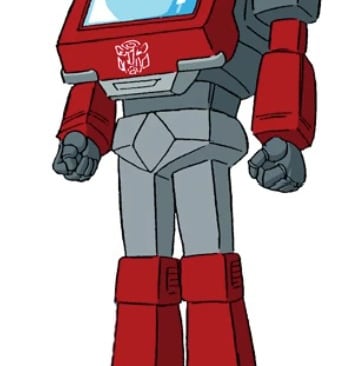
2026 is being touted as the year for AI…which, I find mildly humorous because while ChatGPT has made AI mainstream, artificial intelligence within technology is not a new concept. I have been incredibly blessed to have contributed a part of some cool initiatives representing modalities through each phase of artificial intelligence evolution. This blog is about my experience with basic robotic process automation but I have been incredibly fortunate to have deep experience with democratizing data, implementing modern infrastructures like cloud to machine & deep learning for training models. I am eager to get to play in the agentic AI sandbox. It is too early to tell if the next horizon of robots in the agentic space will be Starscream or Ironhide?